Why You're Tired Even When You Sleep Enough
You're clocking eight hours. You've cut the late nights. You wake up and still reach for the coffee before you've said a word to anyone. Something isn't adding up — and it isn't your discipline.
There's a version of tired that makes sense. After a flight, after a sprint, after a week that asked more than you had. You know where it came from, and you know sleep will fix it.
Then there's the other kind.
The kind that's just there. Present without reason. The coffee that used to land like a freight train now barely gets you to 10 am. The afternoon that used to be your sharpest hour has become something to survive. You're not unwell, exactly. You're not burned out, not technically. You're just — less than you used to be.
If you've quietly started wondering whether this is just what your 40s feel like, the answer is no. But the explanation isn't what most people expect.
The sleep myth nobody talks about
We've been taught a simple equation: tired equals sleep-deprived. So when you're tired even though you're sleeping enough, the instinct is to assume something's wrong with the sleep itself — the quality, the phases, the mattress.
Sometimes that's true. But there's a more fundamental reason why so many people in their 30s, 40s, and 50s feel persistently low on energy despite doing everything right on paper. And it has nothing to do with how long they spend in bed.
It happens inside your cells.
Energy isn't something your body receives. It's something your cells manufacture. And after 40, the production line quietly starts slowing down.
Your body doesn't run on sleep. It runs on a molecule called ATP — adenosine triphosphate — which your cells produce continuously, every second you're alive. Sleep is just the maintenance window. The reset. The time when your cells do their repair work.
But if the machinery that produces ATP is operating below capacity, no amount of sleep can close that gap. You wake up after eight hours and feel like you slept four. Because in a very real sense, at the cellular level, you did.
Meet the molecule your body has been quietly losing
At the center of this energy production is a coenzyme called NAD+ (nicotinamide adenine dinucleotide). Think of NAD+ as the spark plug inside your mitochondria. Without it, the energy cycle doesn't fire. With it, your cells convert food and oxygen into usable fuel efficiently, continuously, without complaint.
Here's the part that changes everything: your NAD+ levels decline with age.
Significantly. Research published in Cell Metabolism showed that NAD+ concentrations in human tissue can drop by more than 50 percent between the ages of 20 and 50. Some studies suggest the decline begins even earlier.
This isn't a fringe theory. NAD+ research has been building for decades, with serious scientific institutions — from Harvard Medical School to the National Institute on Aging — publishing peer-reviewed work on its role in cellular energy, DNA repair, and what researchers call 'healthspan': the years of life you actually feel good during, as distinct from the years you survive.
NAD+ concentrations in human tissue can drop by more than 50 percent between the ages of 20 and 50. That's not a slow fade — it's a structural change in how your body makes energy.
The consequence of that decline isn't dramatic. It doesn't announce itself. It arrives as a gradual dimming — the kind you only notice when you compare how you feel now to how you felt ten years ago. Less sharp. Less resilient. Slower to recover. Tired in a way that sleep used to fix and increasingly doesn't.
That's not aging. That's a specific biological mechanism. And specific mechanisms can be addressed.
Why caffeine makes it worse
The standard response to low energy is caffeine. And caffeine works — it blocks the adenosine receptors that signal fatigue, creating the sensation of alertness. It's a remarkable drug, used by roughly 80 percent of the world's adults, and it does exactly what it promises.
The problem is what caffeine doesn't do.
Caffeine doesn't create energy. It masks the absence of it.
The fatigue doesn't disappear — it's deferred. It accumulates. And when the adenosine blockade wears off, usually around mid-afternoon, it hits all at once, which is why the 2 pm crash feels so much worse than ordinary tiredness. You're not just tired from the day. You're tired from the day, plus everything you borrowed from earlier.
Over time, the body adapts to caffeine — tolerance builds, you need more for the same effect, and the withdrawal symptoms (headache, fog, irritability) become a feature of the morning rather than a response to any particular deficit. The drug has become the baseline.
This doesn't mean caffeine is the enemy. It means caffeine is addressing the symptom while the underlying issue continues unchanged.
What addressing it actually looks like
Restoring NAD+ levels has been the subject of serious research interest for the better part of two decades. The early approaches were clinical — intravenous infusions, high-dose supplements — aimed at therapeutic applications rather than everyday wellness.
Science has moved. What's changed isn't the understanding of NAD+'s role — that's been consistent — it's the delivery. Stabilizing NAD+ outside a clinical environment is technically demanding. The molecule degrades rapidly when exposed to light, heat, and oxidation. Getting it into a form the body can actually absorb and use has been the persistent challenge.
The answer, developed through years of research, was nanocapsulation: a process that encases the molecule in a protective layer, keeping it stable and bioavailable until it reaches your cells.
That technology is now available in a form considerably less intimidating than a clinical drip. Which changes who this conversation is for.
The energy that was already yours
The persistent tiredness that millions of adults have accepted as a fact of middle age isn't inevitable. It's a deficit — specific, measurable, and addressable. The cells that used to fire with ease haven't stopped working. They're running on less than they need.
That's a different problem than exhaustion, and it calls for a different kind of solution. Not more stimulation. More fuel.
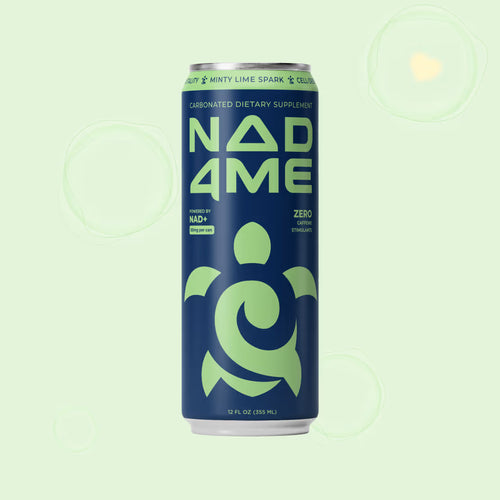
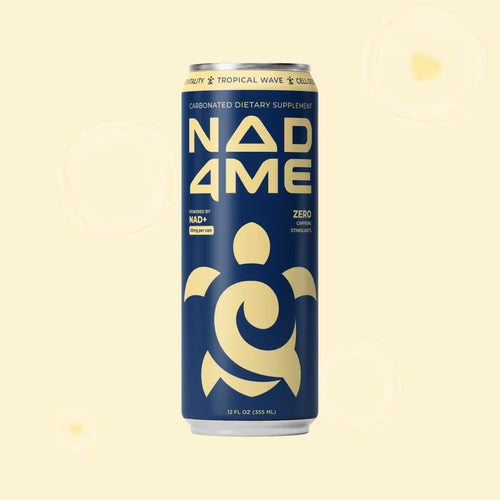
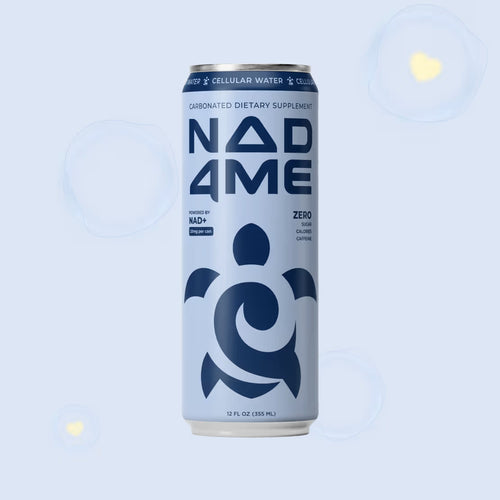
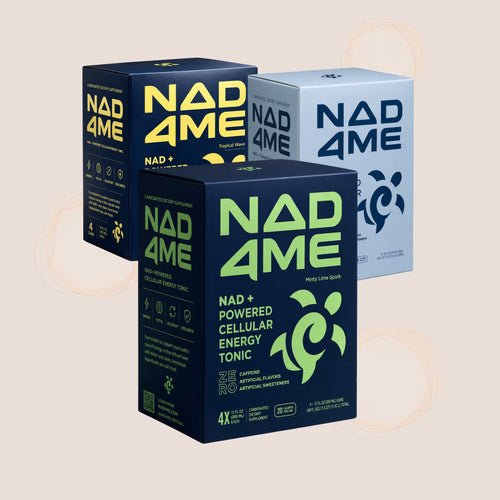
NAD4Me was built on exactly that premise: that cellular energy — the real kind, the kind that doesn't crash, the kind your body produces rather than borrows — belongs in everyday life. Not in a clinic. Not in a supplement routine that feels like another job. In a can, cold, on a Tuesday afternoon, when you need it most.
The tiredness you've been living with has an explanation. That's the first step. The next one's considerably easier.
___________
Photo by Christopher Lemercier on Unsplash