What NAD+ Science Says About Everyday Energy
NAD+ science explains how cells turn nutrients into usable energy and why a caffeine-free daily ritual can support steady focus, recovery, and vitality.
That 3 p.m. dip is not always a motivation problem. Often, it is a demand-and-supply problem happening inside billions of cells. You may be asking for sharp focus, a productive workout, and enough energy left for your evening, while relying on a system strained by stress, poor sleep, long workdays, and the familiar cycle of caffeine followed by a crash. NAD+ science offers a more useful way to think about energy: start with the cellular processes that make it possible.
NAD+, short for nicotinamide adenine dinucleotide, is a naturally occurring coenzyme found in every living cell. It is central to the reactions that turn food into usable cellular energy. That does not make NAD+ a magic switch, and it does not mean every tired day has one explanation. But it does make NAD+ one of the most relevant molecules in the conversation about metabolism, vitality, recovery, and healthy aging.
NAD+ Science Starts With Cellular Energy
Your body does not use the calories in food as instant fuel. Nutrients must be processed through a series of biochemical pathways that ultimately help cells produce ATP, the molecule often described as cellular energy currency. NAD+ has an essential role in that work because it carries electrons from one reaction to another.
Think of NAD+ as a cellular shuttle. When it accepts electrons, it becomes NADH. NADH then helps deliver those electrons into the mitochondria, where they support the process that generates ATP. This NAD+/NADH exchange is active throughout metabolism, including the breakdown of carbohydrates, fats, and amino acids.
That is why the language around cellular energy is different from the language around stimulants. Caffeine works primarily by affecting signaling in the brain, including adenosine pathways that influence how awake you feel. Cellular energy support is about the underlying machinery your cells use every day. Both conversations can exist, but they are not the same thing.
For people who are over the jittery, wired, and depleted feeling of conventional energy drinks, that distinction matters. The future of energy has no caffeine because feeling energized should not require borrowing from tomorrow.
Why NAD+ Is Also Studied in Aging Research
NAD+ does more than participate in energy metabolism. It is also used by enzyme families involved in normal cellular maintenance. Among the best known are sirtuins, PARPs, and CD38.
Sirtuins are enzymes researchers study for their relationship to metabolic regulation and cellular stress responses. PARPs are involved in DNA damage response processes. CD38 is an enzyme that consumes NAD+ and has become a major area of interest in research on inflammation and aging biology. These systems are complex, interconnected, and still being studied, but they show why NAD+ is relevant well beyond a quick energy boost.
Researchers have observed that NAD+ availability can change across the lifespan and in response to factors such as metabolic stress, sleep disruption, exercise, and inflammation. That observation has fueled intense interest in ways to support healthy NAD+ biology. Still, the science deserves a clear-eyed reading: much of the most exciting work has been conducted in cells and animal models, while human research continues to develop.
The practical takeaway is not that one ingredient can rewrite aging. It is that daily habits that support metabolic health matter, and NAD+ belongs in that broader conversation. Sleep, movement, nutrient intake, stress management, and recovery are not separate from cellular wellness. They are the environment in which it operates.
From Biochemistry to Better Days
Biochemistry only becomes meaningful when it connects to real life. For most people, that means asking a simpler question: what kind of energy do I want to feel?
A caffeine spike can be useful in certain moments, but it can also come with trade-offs. Some people experience jitters, digestive discomfort, disrupted sleep, or a hard afternoon drop. Others find they need more and more caffeine to get the same perceived effect. If your morning ritual leaves you overstimulated and your evening self exhausted, it may be time to rethink the model.
Cellular wellness is a different ritual. It is designed around consistent support rather than intensity. The goal is not to feel artificially switched on. It is to build a routine that fits a clear-headed morning, a focused work block, post-workout recovery, or a demanding day without adding more stimulant load.
That is the appeal of a zero-caffeine functional beverage: it can sit beside your existing wellness habits rather than compete with your nervous system. A well-formulated option may pair NAD+ with ingredients selected for complementary roles in daily nutrition and cellular function, such as B vitamins, trigonelline, ergothioneine, inositol, and L-tryptophan.
Each ingredient has its own scientific context. B vitamins are involved in many pathways related to energy metabolism. Ergothioneine is a dietary antioxidant compound that researchers are studying for its role in cellular protection. Trigonelline, a naturally occurring plant compound, is being researched in metabolic and aging contexts. These ingredients should not be treated as interchangeable or as guarantees of a specific outcome. Formulation, dose, diet, sleep, and individual biology all matter.
What NAD+ Science Can and Cannot Promise
The wellness industry often turns emerging science into oversized promises. NAD+ science is more interesting than that, and more useful when it is communicated honestly.
It can explain why researchers care about a molecule involved in energy production, cellular signaling, and maintenance pathways. It can help you understand why mitochondria matter and why a caffeine-free approach may feel more aligned with long-term daily routines. It can also encourage better questions about what is in your drink, what purpose each ingredient serves, and whether a product supports the kind of energy you actually want.
What it cannot do is guarantee that every person will feel the same result. Feeling low energy can have many causes, including a packed schedule, inconsistent meals, inadequate sleep, medication effects, or health concerns that deserve professional attention. A functional beverage is not a substitute for medical care, nor is it a replacement for the fundamentals.
The strongest approach is layered. Use nutrition to provide raw materials. Use movement to challenge and condition metabolic systems. Protect sleep because recovery is active biological work. Then choose rituals that help you stay consistent without turning every demanding day into another stimulant cycle.
A Smarter Energy Ritual
If you are curious about bringing NAD+ science into your routine, start by noticing your current pattern. Are you reaching for coffee before water? Do you feel focused for two hours and flat by midafternoon? Does your pre-workout routine interfere with sleep later that night? The answers point to the trade-offs your current energy strategy may be asking you to accept.
Then make the ritual simple. Pair a cellular wellness drink with a dependable moment in your day: your morning desk setup, the drive to the gym, or the transition out of the afternoon slump. Consistency matters more than chasing a dramatic sensation. The best routine is one you can repeat on a Tuesday, not just one that sounds impressive on a Monday.
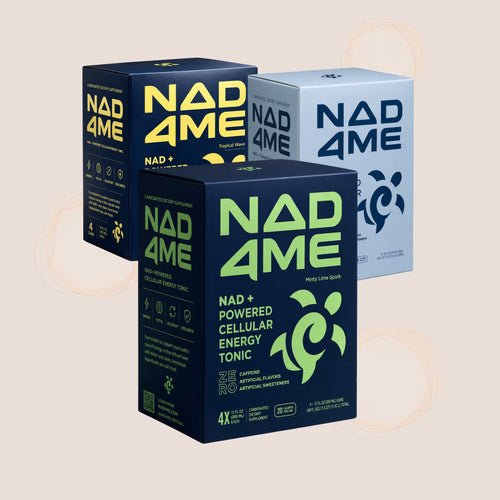
NAD&ME was built around this idea: energy can be a daily vitality practice, not a stimulant dependency. Its NAD+-powered approach reflects a shift toward supporting the biology behind how energy is made, while keeping the experience clean, convenient, and caffeine-free.
The Energy Question Worth Asking
The next time you need a lift, ask whether you want stimulation or support. There is no universal answer. A cup of coffee may still have a place in your life. But if you are looking for steadier focus, a less frantic day, and an energy ritual that respects your evening as much as your morning, cellular wellness is a compelling place to start.
Bring curiosity to the science, keep your expectations grounded, and build the habits that help you feel more like yourself - clear, capable, and ready for what the day asks of you.