How NAD Supports Mitochondria and Daily Energy
Learn how NAD supports mitochondria, helping cells turn nutrients into steady energy for clearer days, stronger routines, and less reliance on stimulants.
Your 3 p.m. energy slump is not always about motivation, sleep, or needing another coffee. Often, it is a signal that your cells are working hard to meet demand. Understanding how NAD supports mitochondria helps explain why real energy is more than a quick hit of caffeine. It starts with the systems inside your cells that convert food, oxygen, and stored fuel into usable energy.
Mitochondria are often called the power plants of the cell. The analogy is useful, but incomplete. These tiny structures do not simply produce energy on command. They rely on a steady flow of nutrients, oxygen, enzymes, and coenzymes to keep energy production moving. NAD is one of the central players in that process.
How NAD supports mitochondria
NAD, short for nicotinamide adenine dinucleotide, is a coenzyme found in every living cell. It naturally shifts between two forms: NAD+ and NADH. Think of this pair as a cellular shuttle. NAD+ accepts electrons during the breakdown of carbohydrates, fats, and proteins. Once it carries those electrons, it becomes NADH.
That transfer matters because mitochondria use the energy stored in NADH to help make ATP. ATP is the molecule cells use for everyday work: muscle contraction, nerve signaling, protein production, and the countless behind-the-scenes tasks that keep you moving, thinking, and recovering.
Inside the mitochondria, NADH delivers electrons to the electron transport chain, a series of protein complexes embedded in the inner mitochondrial membrane. At Complex I, those electrons help initiate a controlled process that creates a gradient of charged particles. That gradient powers ATP synthase, the enzyme responsible for producing ATP.
The science can sound technical. The practical takeaway is simple: NAD participates in the handoff that turns nutrients into cellular energy. When you are focused in a long meeting, training after work, or trying to stay present through a packed day, that cellular handoff is happening continuously.
NAD is not a stimulant, and that is the point
Caffeine creates a familiar kind of alertness by interacting with adenosine signaling in the brain. It can be useful, but it does not directly supply the cellular machinery with energy. It can also come with trade-offs: jitters, sleep disruption, a hard crash, or the feeling that you need progressively more to get the same effect.
NAD works in a different biological lane. It is involved in the metabolic processes that support ATP production, rather than stimulating your nervous system into feeling more awake. That distinction is why cellular wellness has become such a compelling conversation for people who want to feel capable without being over-caffeinated.
This does not mean that every low-energy day has one cause or one answer. Sleep quality, food intake, hydration, stress, movement, medications, and overall health all shape how you feel. But supporting daily routines with an understanding of cellular energy can be a more thoughtful strategy than chasing another spike-and-crash cycle.
The connection between NAD, metabolism, and mitochondria
Before nutrients become ATP, they move through a sequence of metabolic pathways. During glycolysis, cells break down glucose and generate a small amount of ATP along with NADH. The citric acid cycle, which takes place largely inside mitochondria, creates more NADH as it processes fuel derived from carbohydrates, fats, and amino acids.
NADH then carries its electron cargo to the electron transport chain. In this way, NAD helps connect what you eat to the energy your cells can use. It is a critical part of metabolic flexibility: your body’s ability to draw on different fuel sources depending on the moment.
That matters beyond workouts. A demanding presentation, a busy travel day, an afternoon of parenting, or a late-day strength session all require energy. Mitochondria do not distinguish between a calendar full of meetings and a hard interval workout. They respond to demand by coordinating fuel and energy production.
Mitochondrial support is also about cellular maintenance
NAD’s role is not limited to the electron transport chain. It also serves as a substrate for enzyme families involved in cellular signaling and maintenance, including sirtuins and PARPs. These enzymes are associated with processes such as how cells respond to stress and how they manage DNA damage.
That does not make NAD a magic fix or a shortcut around the fundamentals. Cellular maintenance is complex, and researchers are still studying how NAD-related pathways interact with aging, metabolism, exercise, and environmental stressors. The honest view is more useful than the hype: NAD is foundational to cell function, but your daily choices still set the conditions for how well your energy systems can operate.
Sleep gives your body time for restoration. Regular movement encourages mitochondrial adaptation. Adequate protein, colorful plants, healthy fats, and micronutrient-rich foods provide the raw materials metabolism depends on. Stress management can reduce the constant demand placed on your system. These habits are not flashy, but they are the baseline for sustained vitality.
Why energy can feel different from cell to cell
You may know someone who can drink coffee at 5 p.m. and sleep perfectly, while one espresso leaves you anxious for hours. The same is true of energy needs more broadly. Your experience is shaped by genetics, training status, diet, sleep debt, work schedule, and the demands of the season you are in.
That is why a cellular approach should feel personal, not prescriptive. A high-performing athlete may prioritize recovery around intense training. A busy professional may care most about clear, calm focus after lunch. Someone easing off caffeine may simply want a better morning ritual that does not make their heart race.
The goal is not to feel artificially switched on at all times. Sustainable energy feels steadier. It supports showing up for your day, then winding down when the day is done.
Building a routine around cellular energy
If you are curious about supporting your energy without leaning harder on stimulants, start by looking at the moments when your routine breaks down. Is it the rushed morning? The post-lunch fog? The point when you want to exercise but have nothing left in the tank?
Then build around the basics. Eat consistently enough to support your activity level. Protect your sleep window. Move your body in ways that challenge you without running you into the ground. Get daylight early when possible, and make hydration a non-negotiable rather than an afterthought.
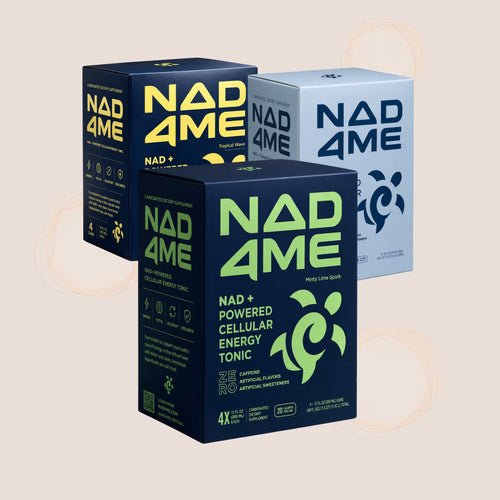
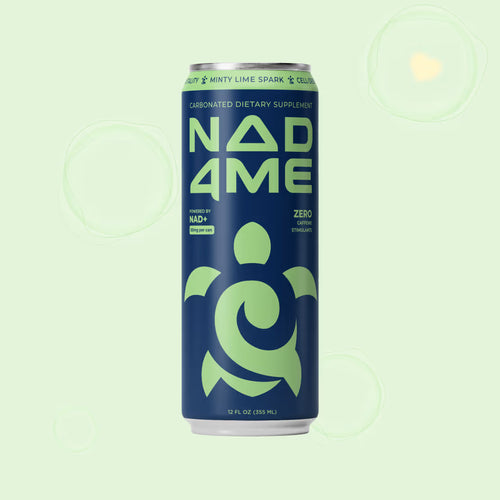
A functional beverage can fit into that ritual when it is designed around cellular wellness instead of a caffeine jolt. NAD&ME was created for people who want a modern energy ritual centered on stabilized NAD+ and thoughtfully selected supporting ingredients, without making caffeine the main event.
The best approach is to pay attention to your own feedback. Notice whether your routine helps you feel clear, grounded, and capable through the afternoon, not just temporarily wired in the morning. If you have a health condition, are pregnant or nursing, or take medications, speak with a qualified healthcare professional before making major changes to your supplement routine.
The bigger shift: energy that starts beneath the surface
The future of energy does not have to look like a neon can, a sugar rush, and a late-night sleep problem. It can look more intentional: respect for the cellular systems already working around the clock to power your life.
NAD helps mitochondria do one of their most essential jobs - transferring the energy in food into ATP that cells can use. That is not a promise of instant transformation. It is a powerful reminder that the kind of energy worth building is not borrowed from tomorrow. It is supported from within, one well-chosen daily ritual at a time.