What Is Cellular Energy, Really?
What is cellular energy? Learn how your cells make energy, why it affects focus and stamina, and what supports steady energy without caffeine.
You can sleep eight hours, eat pretty well, and still hit that strange wall at 2 p.m. where your body feels present but your brain has quietly checked out. That gap is exactly why more people are asking what is cellular energy - because not all energy starts with a cup, a can, or a quick jolt. Some of it starts much deeper, inside the machinery that keeps you going in the first place.
Cellular energy is the energy your cells create and use to power nearly everything your body does. That includes obvious things like moving, working out, and getting through a long day, but it also includes less visible jobs like supporting mental clarity, maintaining normal metabolism, and helping your body manage everyday repair and recovery demands. When people talk about feeling naturally energized, this is usually what they mean, whether they know the term or not.
What is cellular energy?
At the simplest level, cellular energy is the usable fuel produced inside your cells from the food you eat and the oxygen you breathe. Your body converts nutrients into a molecule called ATP, short for adenosine triphosphate. ATP is often called the body's energy currency because it powers cellular work in real time.
This process happens largely in the mitochondria, which are often described as the powerhouses of the cell. That phrase gets used a lot because it is directionally true. Mitochondria help turn carbohydrates, fats, and sometimes protein into ATP, which your cells can then spend on everything from muscle contraction to nerve signaling.
If that sounds abstract, think of it this way. Stimulants can make you feel more alert for a while. Cellular energy is what gives your body the actual capacity to do the work.
Why cellular energy matters in everyday life
When cellular energy production is well supported, the result can feel like steadier mornings, clearer thinking, more even stamina, and less dependence on the spike-and-crash cycle that comes with high-caffeine or sugar-loaded options. That does not mean you feel superhuman. It usually feels more subtle than that. More stable. More like your baseline is working with you instead of against you.
This matters because energy is not just about motivation. You cannot mindset your way out of biology. If your cells are under-supported, your body may still push through, but it often does so less efficiently. That can show up as sluggishness, mental fog, poor resilience after a hard workout, or that feeling of running on fumes by early evening.
There is also an important trade-off here. Quick energy and sustained energy are not always the same thing. A stimulant-heavy product may create a strong immediate sensation, but that sensation is different from supporting the processes your cells rely on all day. For people who want endurance over intensity, cellular support becomes much more interesting.
How your body makes cellular energy
Your body is running an elaborate conversion system every minute of the day. You eat food, digest it into nutrients, absorb those nutrients, and then your cells get to work. Through a series of metabolic pathways, those nutrients are broken down and transformed into ATP.
A big part of this happens in the mitochondria through processes like the Krebs cycle and oxidative phosphorylation. You do not need to memorize the chemistry to understand the takeaway. Your body is constantly translating raw materials into usable energy, and that translation depends on the right conditions.
Those conditions include enough nutrients, healthy mitochondrial function, oxygen delivery, hydration, sleep, and overall metabolic balance. This is why low energy is rarely caused by one thing alone. It can be lifestyle, nutrition, stress load, age-related changes, or simply the cumulative effect of modern routines that ask for too much while supporting too little.
Where NAD+ fits into cellular energy
If you have spent any time in the wellness or longevity space, you have probably heard of NAD+. It matters because it plays a central role in the metabolic processes that help cells produce energy. NAD+ is a coenzyme found in every living cell, and it is involved in transferring electrons during the reactions that ultimately help generate ATP.
In plain English, NAD+ helps the energy-making process move forward. It also has a broader relationship with cellular function, including pathways associated with repair and resilience. That is one reason it has become such a focal point in conversations around vitality, healthy aging, and non-stimulant energy support.
What matters for consumers is not just the biochemistry, but the shift in perspective. Instead of asking, "What can make me feel wired right now?" the better question becomes, "What supports the systems behind real energy?"
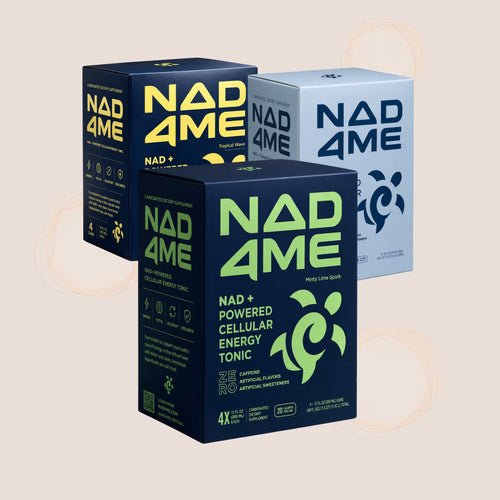
That is the category NAD&ME is speaking to. The future of energy has no caffeine if your goal is steadiness, clarity, and a daily ritual that feels more like support than compensation.
What cellular energy is not
Cellular energy is not the same as a stimulant buzz. That distinction is worth making because the word energy gets used loosely in wellness marketing.
Caffeine works primarily by affecting adenosine signaling in the brain, which can help you feel more awake. Sugar can provide a fast source of fuel, but it may also contribute to a less stable experience depending on the dose, the context, and your own metabolism. Neither one is automatically bad. It depends on the person and the moment. But they are not identical to improving the cellular processes that create sustained energy.
This is why someone can feel alert and still feel depleted. Perceived energy and cellular capacity do not always match.
What supports healthy cellular energy
Cellular energy is built, not borrowed. That starts with the basics, even if they are less exciting than a dramatic before-and-after promise.
Sleep is non-negotiable. Your body does a surprising amount of metabolic housekeeping at night, and poor sleep can make even a great nutrition plan feel ineffective. Protein intake, balanced meals, hydration, movement, and stress management all matter because they influence how efficiently your body can create and use energy.
Micronutrients matter too. B vitamins are especially relevant because they help support normal energy metabolism. Other wellness ingredients often come up in this conversation because they are being studied for how they interact with cellular function, oxidative stress, or metabolic resilience. Context matters, though. Ingredients are not magic on their own. A smart formula works best when it is part of a routine, not a substitute for one.
That is also why the best energy rituals tend to feel sustainable. If something gives you a dramatic lift but leaves you drained later, it may be doing more borrowing than building.
Why people are shifting from stimulation to support
There is a reason the language around energy is changing. More consumers are tired of feeling like they have to choose between being productive and feeling balanced. They want focus without jitters, stamina without the crash, and a routine that fits long-term wellness instead of fighting it.
That shift has opened the door to more science-forward conversations around mitochondria, metabolism, and cellular support. Ten years ago, those ideas mostly stayed in research circles or niche wellness communities. Now they are becoming part of how everyday consumers think about fatigue, performance, and vitality.
The appeal is simple. Cellular energy is a more intelligent frame. It respects the fact that your body is not a machine you can endlessly override. It works better when supported at the source.
What is cellular energy in practical terms?
If you want the practical answer to what is cellular energy, here it is: it is your body's ability to produce the fuel your cells need to keep you mentally sharp, physically capable, and more resilient through the day. It is less about feeling amped up and more about feeling available to your own life.
That can mean a smoother start to the morning. Better consistency between meetings. A workout that does not leave you flattened for the rest of the day. More presence at dinner instead of that wired-but-exhausted state so many people have normalized.
And yes, it depends on the person. Some people do well with coffee and will keep it in the mix. Others know caffeine stops working for them after a certain point, or creates too much noise in the system. For that second group especially, cellular energy is not just a wellness buzzword. It is a better lens for choosing what real support looks like.
The most useful way to think about energy is this: if you want a better day, start with what your cells need to make one.