Why Does Caffeine Cause Jitters? The Science
Why does caffeine cause jitters? Learn how stimulants affect your nervous system, why sensitivity varies, and how to find steadier energy without the crash
That midmorning coffee can feel like a clean switch turning on - until your hands feel unsteady, your thoughts speed up, and calm focus becomes restless momentum. So, why does caffeine cause jitters for some people, sometimes after just one cup? It comes down to how caffeine changes signaling in your brain and body, plus the personal factors that determine how strongly you feel it.
Jitters are not a character flaw or proof that you cannot handle a busy day. They are useful feedback. Your system is telling you that the dose, timing, or context of your caffeine habit may be asking more from your nervous system than it wants to give.
Why Does Caffeine Cause Jitters in the First Place?
Caffeine works primarily by blocking adenosine, a brain chemical that helps build the feeling of sleep pressure as the day goes on. When caffeine occupies adenosine receptors, that tired signal is temporarily muted. You may feel more alert, quicker to react, and more motivated to start the task in front of you.
But alertness does not happen in isolation. With adenosine held back, stimulating signals can become more noticeable, including the activity of adrenaline-related pathways. Your heart may beat more forcefully, your body may feel primed for action, and your mind may move faster than your ability to settle it. That physical edge is what many people describe as the jitters.
The experience can range from subtle fidgeting and a racing train of thought to trembling hands, sweating, stomach discomfort, or a distinctly anxious feeling. Caffeine does not create the same response in every person, and it is not always unpleasant. A small amount may feel productive. Beyond your personal threshold, that same stimulation can stop feeling like energy and start feeling like friction.
Caffeine Is Fast. Your Body Is Not Always Ready
Coffee, energy drinks, pre-workout powders, tea, soda, and even some supplements can deliver caffeine quickly. The speed matters. A concentrated dose taken in a few minutes, especially before food or during a stressful morning, can produce a sharper rise in stimulation than a drink sipped slowly over time.
Caffeine is also not a direct source of cellular energy. It changes how awake you feel by influencing nervous-system signaling. That distinction matters when you are already under-slept, under-fueled, dehydrated, or carrying a full mental load. A stimulant can temporarily cover fatigue, but it does not necessarily address why your energy feels depleted in the first place.
For some people, the initial lift is followed by an afternoon dip. That dip may encourage another coffee, which can create a cycle of chasing alertness, feeling overstimulated, then struggling to wind down at night. Poor sleep can make caffeine feel more necessary the next day. It is an easy loop to fall into, particularly when work, workouts, and life all demand your best hours at once.
Stress can turn a normal dose into too much
Caffeine and stress can amplify one another. If you drink coffee while rushing through emails, skipping breakfast, or bracing for a difficult meeting, your body may already be in a heightened state. Adding a stimulant can make that state feel louder.
This is why the same latte may feel fine on a slow Saturday and uncomfortable on a packed Tuesday. Your caffeine tolerance is not just about the beverage. It is also about sleep, stress, meal timing, hydration, exercise, and what else your body is processing that day.
Why Some People Get Jitters More Easily
Your response to caffeine is highly individual. Genetics influence how quickly your body processes it, and caffeine can remain in the system for hours. People who metabolize it more slowly may feel its effects longer, including the late-day restlessness that interferes with sleep.
Sensitivity can also shift over time. A dose that once felt routine may begin to feel intense during periods of poor sleep, hormonal changes, reduced food intake, higher stress, or changes in medications and supplements. Pregnancy can also change how the body handles caffeine, so individualized guidance from a qualified clinician is appropriate.
The source and serving size matter more than most labels make clear. A small brewed coffee, a large cold brew, an energy drink, and a scoop of pre-workout are not interchangeable. Some products also combine caffeine with other stimulating ingredients, making the overall experience harder to predict.
Watch for these patterns if you are trying to identify your threshold:
- You feel wired after an amount that used to feel normal.
- Your hands shake, your stomach feels unsettled, or your heart feels noticeably more active.
- You need caffeine later and later in the day to push through fatigue.
- You feel tired but cannot relax at night.
- Your focus becomes scattered rather than clear.
The Trade-Off Between a Boost and Better Energy
Caffeine is not inherently bad. Many adults enjoy it, and many tolerate moderate amounts without feeling jittery. The relevant question is whether it is helping you show up how you want to show up.
If your morning routine delivers clear focus without disrupting your appetite, mood, sleep, or sense of calm, it may be working for you. If it gives you a quick lift followed by a shaky body, a distracted mind, or an evening that feels impossible to switch off, the trade-off may no longer be worth it.
The future of energy has no caffeine because sustained vitality should not have to feel like a nervous-system negotiation. A more supportive approach asks what your energy needs beyond stimulation: consistent sleep, regular meals with enough protein and fiber, movement, daylight, hydration, and a routine that supports your body instead of constantly overriding it.
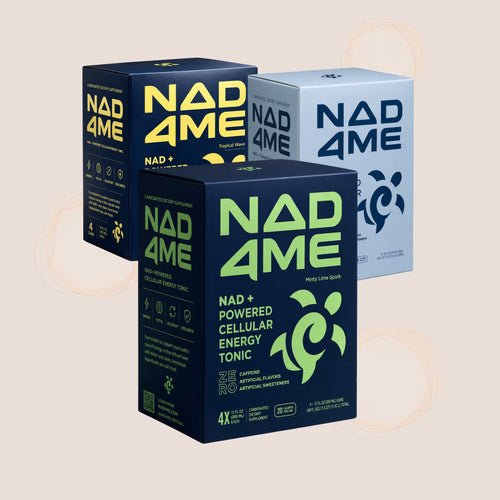
For people who want a caffeine-free ritual, NAD&ME was created around a different idea of daily energy - cellular wellness support without relying on stimulant intensity or sugar-heavy formulas. The goal is not to mimic the rush of an energy drink. It is to make room for a steadier, more natural-feeling kind of momentum.
How to Reduce Caffeine Jitters Without Going Cold Turkey
If caffeine has become part of your routine, abruptly cutting it out may leave you with headaches, fatigue, or irritability. A gradual adjustment is often more realistic. Start by reducing the amount, not necessarily eliminating the ritual. Choose a smaller serving, dilute a stronger drink, or swap one daily caffeinated beverage for a decaf or caffeine-free option.
Timing can be just as powerful as dosage. Have caffeine after a meal rather than on an empty stomach, and consider setting an earlier cutoff so your evening has room to become genuinely restful. The exact time varies by person, but if you are still feeling alert when you want to sleep, your cutoff likely needs to move earlier.
It also helps to separate fatigue from habit. Before reaching for another coffee, pause for a few minutes. Drink water. Step outside. Eat something if you have not had a balanced meal. Take a brief walk or stretch. None of these replaces sleep, but they can help you tell the difference between a true need for rest and a reflex to seek another stimulant.
If symptoms feel severe, new, persistent, or concerning, speak with a healthcare professional. Caffeine sensitivity can overlap with many other factors, and personalized guidance is more useful than trying to self-diagnose from a social post.
The best energy is not the kind that makes you feel chased by your own heartbeat. It is the kind that lets you move through a full day with clarity, capability, and enough calm left over to enjoy your evening.